
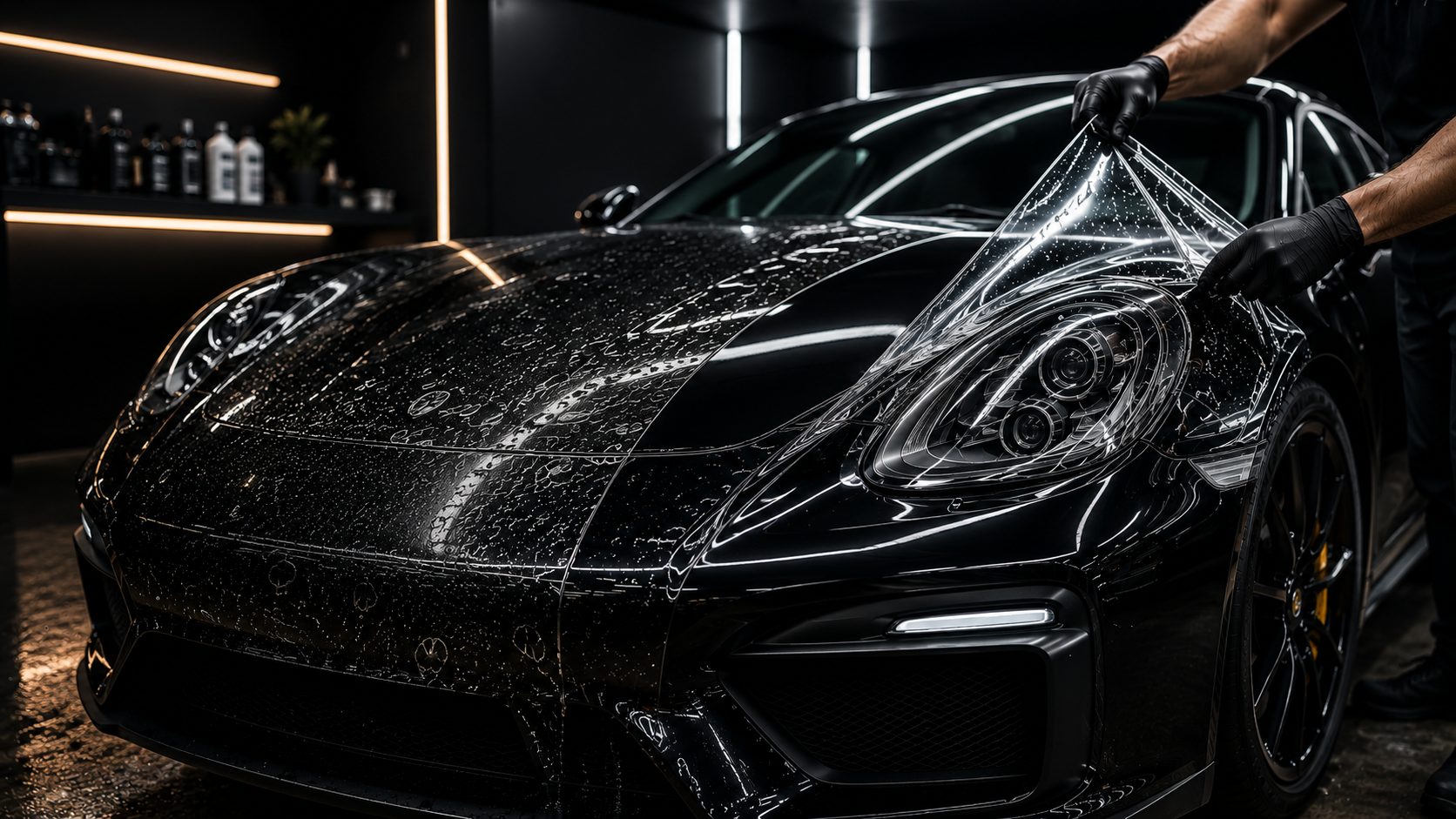

Protect Your Vehicle’s Paint with the Ultimate Invisible Shield
Your vehicle is one of the largest investments you’ll make, and keeping it looking showroom-fresh can be a challenge. Everyday driving exposes your paintwork to stone chips, road debris, bug splatter, bird droppings, UV damage, scratches, and harsh environmental contaminants.
This is where Paint Protection Film (PPF) comes in.
Paint Protection Film is widely regarded as the most advanced form of paint protection available today, offering superior protection while maintaining your vehicle’s original appearance.
What is Paint Protection Film?
Paint Protection Film, commonly known as PPF or “clear bra,” is a transparent, ultra-durable polyurethane film that is professionally applied to a vehicle’s painted surfaces.
Designed to absorb impacts and resist damage, PPF acts as an invisible barrier between your vehicle’s paintwork and the harsh realities of daily driving.
Modern premium PPF is virtually invisible once installed and is engineered to provide long-lasting protection without affecting the colour, gloss, or appearance of your vehicle.
Why is Paint Protection Film Important?
No matter how carefully you drive, your vehicle is constantly exposed to hazards that can damage its paint.
Common causes of paint damage include:
- Stone chips from highway driving
- Road debris and gravel
- Bug splatter and bird droppings
- Tree sap and environmental fallout
- Light scratches and swirl marks
- UV exposure and paint fading
- Improper washing techniques
Even a single stone chip can lead to costly repairs and reduce the overall appearance and value of your vehicle.
PPF provides a sacrificial protective layer that takes the abuse so your paint doesn’t have to.
Key Benefits of Paint Protection Film
1. Stone Chip Protection
PPF is specifically engineered to absorb impacts from stones and road debris, significantly reducing the risk of paint chips and surface damage.
For drivers who frequently travel on highways or gravel roads, this benefit alone can save thousands in repainting costs.
2. Self-Healing Technology
Premium Paint Protection Films feature advanced self-healing properties.
Minor scratches and swirl marks can disappear when exposed to heat from the sun or warm water, helping your vehicle maintain a flawless finish for years.
3. UV Protection
Constant exposure to sunlight can cause paint to oxidize and fade over time.
PPF helps block harmful UV rays, preserving your vehicle’s original colour and finish.
4. Hydrophobic Properties
Modern PPF features a hydrophobic top coat that repels water, dirt, and contaminants.
This makes cleaning easier while helping your vehicle stay cleaner for longer.
5. Chemical Resistance
Bird droppings, bug residue, tree sap, and road contaminants can permanently damage paint if left untreated.
PPF creates a protective barrier against these harmful substances, reducing the risk of staining and etching.
6. Preserves Vehicle Value
A vehicle with well-maintained paintwork will always command a higher resale value than one covered in chips, scratches, and defects.
PPF helps preserve the condition of your vehicle, protecting your investment for years to come.
7. Virtually Invisible Protection
Unlike older generations of protection products, modern PPF is incredibly clear and designed to maintain the original appearance of your vehicle.
Most people won’t even notice it’s there.
Which Areas of a Vehicle Should Be Protected?
While full vehicle protection offers the highest level of coverage, many owners choose to protect high-impact areas such as:
- Front bumper
- Bonnet
- Front fenders
- Headlights
- Side mirrors
- Door handle cups
- Door sills
- Boot sill
- A-pillars
- Roof leading edge
These areas are typically the most vulnerable to stone chips and daily wear.
PPF vs Ceramic Coating
One of the most common questions vehicle owners ask is:
“Should I choose Paint Protection Film or Ceramic Coating?”
The answer is simple:
Paint Protection Film
- Protects against stone chips
- Protects against scratches
- Self-healing properties
- Impact-resistant
Ceramic Coating
- Improves gloss
- Enhances hydrophobic performance
- Makes cleaning easier
- Provides chemical resistance
For the ultimate protection package, many vehicle owners choose to install PPF first and then apply a ceramic coating over the film.
This combination delivers both physical protection and exceptional ease of maintenance.
Is Paint Protection Film Worth It?
Absolutely.
When compared to the cost of repainting damaged panels, correcting paint defects, or repairing stone chip damage, Paint Protection Film is a smart long-term investment.
Whether you own a daily driver, luxury vehicle, performance car, SUV, or collector vehicle, PPF provides peace of mind every time you hit the road.
Premium Protection Without Compromise
At Rogue & Co, we’ve partnered with one of the industry’s leading Paint Protection Film manufacturers to bring our clients premium-quality protection at affordable rates.
Our films are designed to offer exceptional clarity, advanced self-healing technology, superior durability, and long-term performance—without compromising on appearance.
Every installation is precision-cut and professionally applied to ensure a seamless finish that protects your vehicle while maintaining its factory appearance.
Protect Your Investment Today
Your vehicle deserves more than temporary protection.
Paint Protection Film provides long-lasting defence against the elements, helping your paintwork stay cleaner, glossier, and protected from everyday damage.
Whether you’re looking to protect vulnerable areas or safeguard your entire vehicle, our team can help you choose the right solution for your needs.
Contact Rogue & Co today to learn more about our Paint Protection Film packages and discover why more vehicle owners are choosing PPF as the ultimate paint protection solution.