
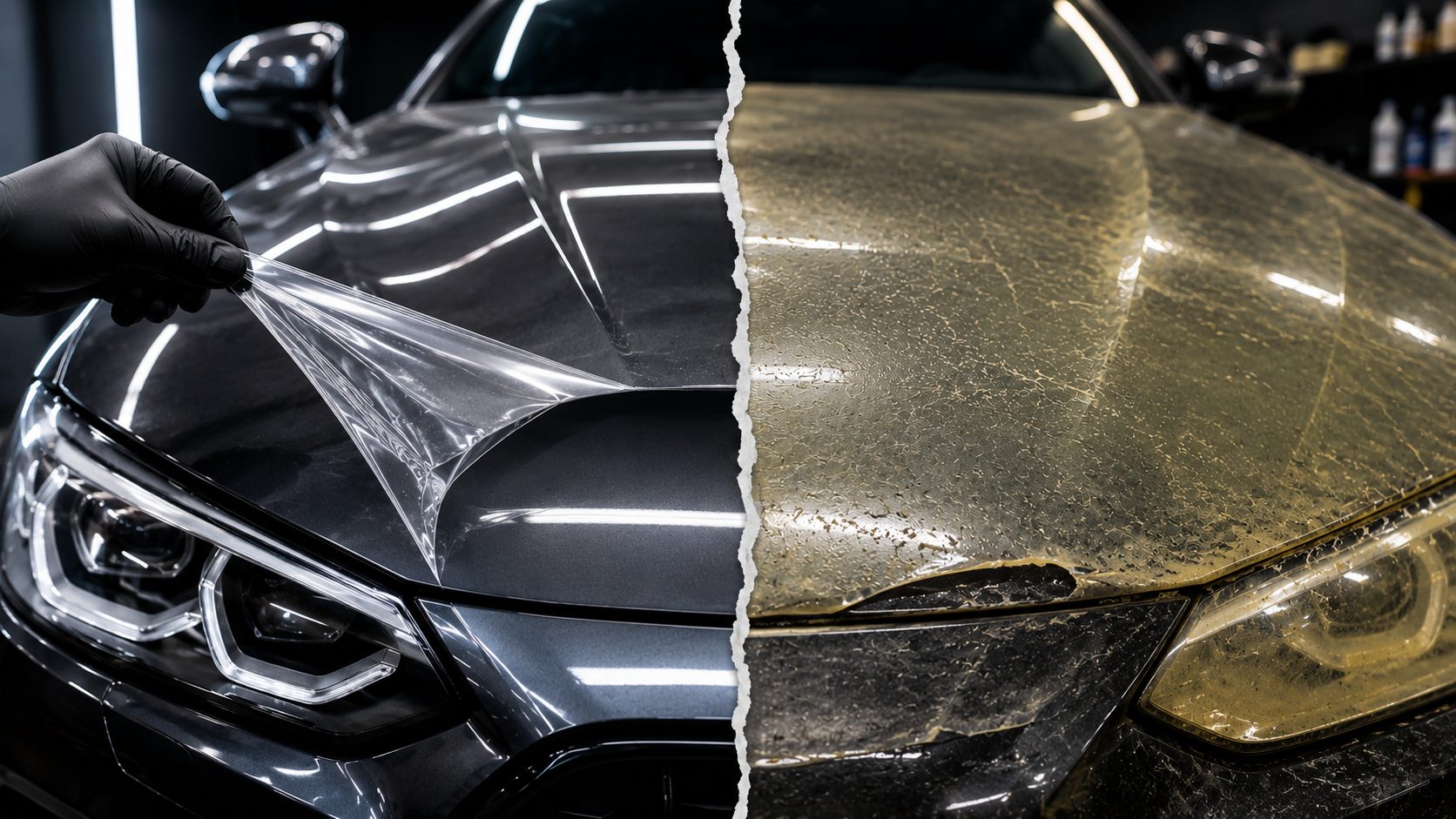

Paint Protection Film (PPF) has become one of the most effective ways to protect a vehicle’s paintwork from stone chips, scratches, road debris, UV exposure, and environmental contamination. However, not all PPF products are created equal.
As the popularity of PPF continues to grow, so does the number of low-cost alternatives entering the market. While these budget-friendly options may appear attractive upfront, they often fail to deliver the protection, clarity, and longevity that vehicle owners expect. In many cases, choosing cheap PPF can end up costing significantly more in the long run.
The Problem With Low-Quality PPF
Many low-cost films are manufactured using inferior materials and outdated adhesive technologies. While they may initially look similar to premium films, their performance quickly reveals the difference.
Common issues associated with low-quality PPF include:
- Yellowing and discoloration over time
- Poor optical clarity
- Reduced impact resistance
- Edge lifting and adhesive failure
- Permanent staining from contaminants
- Difficulty removing the film without damaging paintwork
- Limited or non-existent manufacturer warranties
What starts as a cost-saving decision can often result in expensive removal, replacement, and paint correction work later.
Yellowing: The Most Common Complaint
One of the biggest concerns with budget PPF is yellowing.
Vehicle owners often invest in PPF to preserve the appearance of their paintwork, only to find the film becoming discoloured after prolonged exposure to sunlight. This is especially problematic in climates with high UV exposure, where inferior films break down much faster.
Premium films are engineered with advanced UV inhibitors and topcoat technologies that help maintain crystal-clear transparency for years. Cheap films typically lack these protections, leading to an aged and neglected appearance.
Reduced Protection When You Need It Most
The primary purpose of PPF is protection.
Low-quality films often have inconsistent thickness, weaker polyurethane layers, and poor elasticity. This means they may tear, puncture, or fail to absorb impacts effectively when exposed to stone chips and road debris.
A premium film acts as a sacrificial barrier designed to absorb impact energy before it reaches the vehicle’s paintwork. Inferior products simply cannot provide the same level of protection.
Poor Self-Healing Performance
Modern premium PPF features self-healing technology that allows light scratches and swirl marks to disappear when exposed to heat.
Many cheaper films either do not have self-healing capabilities or offer very limited performance. Over time, scratches accumulate, causing the vehicle’s finish to look worn and neglected.
The result is a film that ages quickly and loses its premium appearance long before it should.
Adhesive Failure and Edge Lifting
A quality installation is only as good as the film being installed.
Low-quality adhesives can result in:
- Edge lifting
- Peeling corners
- Bubbling
- Moisture intrusion
- Dirt accumulation beneath the film
These issues not only affect appearance but can also compromise the film’s ability to protect the paint underneath.
Premium films use advanced adhesive systems that provide excellent bonding while still allowing for safe removal when required.
Removal Can Become a Nightmare
One of the most overlooked aspects of cheap PPF is what happens years later when it needs to be removed.
Low-grade adhesives often harden over time, causing the film to crack, tear, and leave excessive residue behind. In severe cases, paint damage can occur during removal.
Premium PPF is engineered to maintain its integrity throughout its lifespan and can typically be removed safely by a trained professional.
Limited Warranty Support
Many low-cost films either offer no warranty or provide warranties that are difficult to enforce.
Premium manufacturers invest heavily in research, testing, and quality control, backing their products with comprehensive warranties that cover issues such as yellowing, cracking, delamination, and adhesive failure.
A warranty is only valuable when the manufacturer has the reputation and infrastructure to support it.
The Value of Premium Protection
While premium Paint Protection Film may have a higher initial investment, it delivers superior performance, appearance, durability, and long-term value.
Benefits of premium PPF include:
- Outstanding optical clarity
- Industry-leading impact protection
- Advanced self-healing technology
- Hydrophobic surface properties
- UV resistance and anti-yellowing protection
- Long-term durability
- Manufacturer-backed warranties
- Higher resale value preservation
When protecting a vehicle worth hundreds of thousands—or even millions—of rand, cutting corners on protection rarely makes financial sense.
Final Thoughts
Paint Protection Film is an investment designed to preserve your vehicle’s appearance and value. Choosing a cheap, low-quality film may save money initially, but the long-term consequences can include yellowing, peeling, reduced protection, and costly replacement.
The best PPF installations combine premium film, professional installation, and ongoing maintenance to ensure years of reliable protection and a flawless finish.
When it comes to protecting your vehicle, quality is not an expense—it is an investment.
Hi, this is a comment.
To get started with moderating, editing, and deleting comments, please visit the Comments screen in the dashboard.
Commenter avatars come from Gravatar.